Losing one or more teeth forces a decision that affects your mouth, your budget and your confidence for years to come. The dental implants vs dentures debate isn't really about which option looks better on day one. It's about which one actually serves you best over the next 10, 15 or 20 years. This guide breaks down how each option works, what they really cost over time, and how to figure out which is the smarter long-term investment for your situation.
How Dental Implants and Dentures Actually Work
The two options solve the same problem in completely different ways.
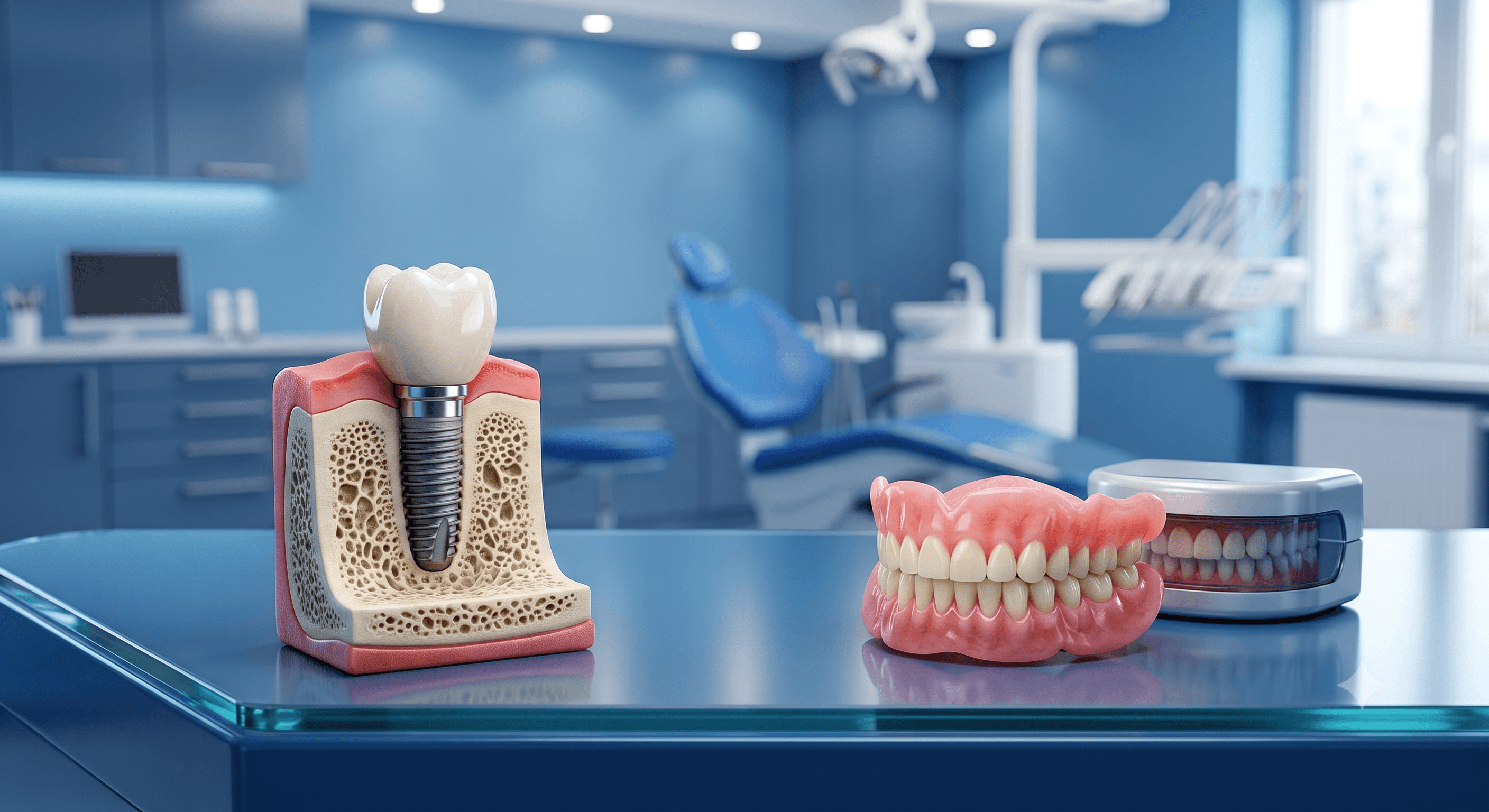
- Dentures are removable prosthetics that sit on top of your gums, held in place by suction, adhesive or the shape of your jaw ridge. You take them out at night and clean them separately.
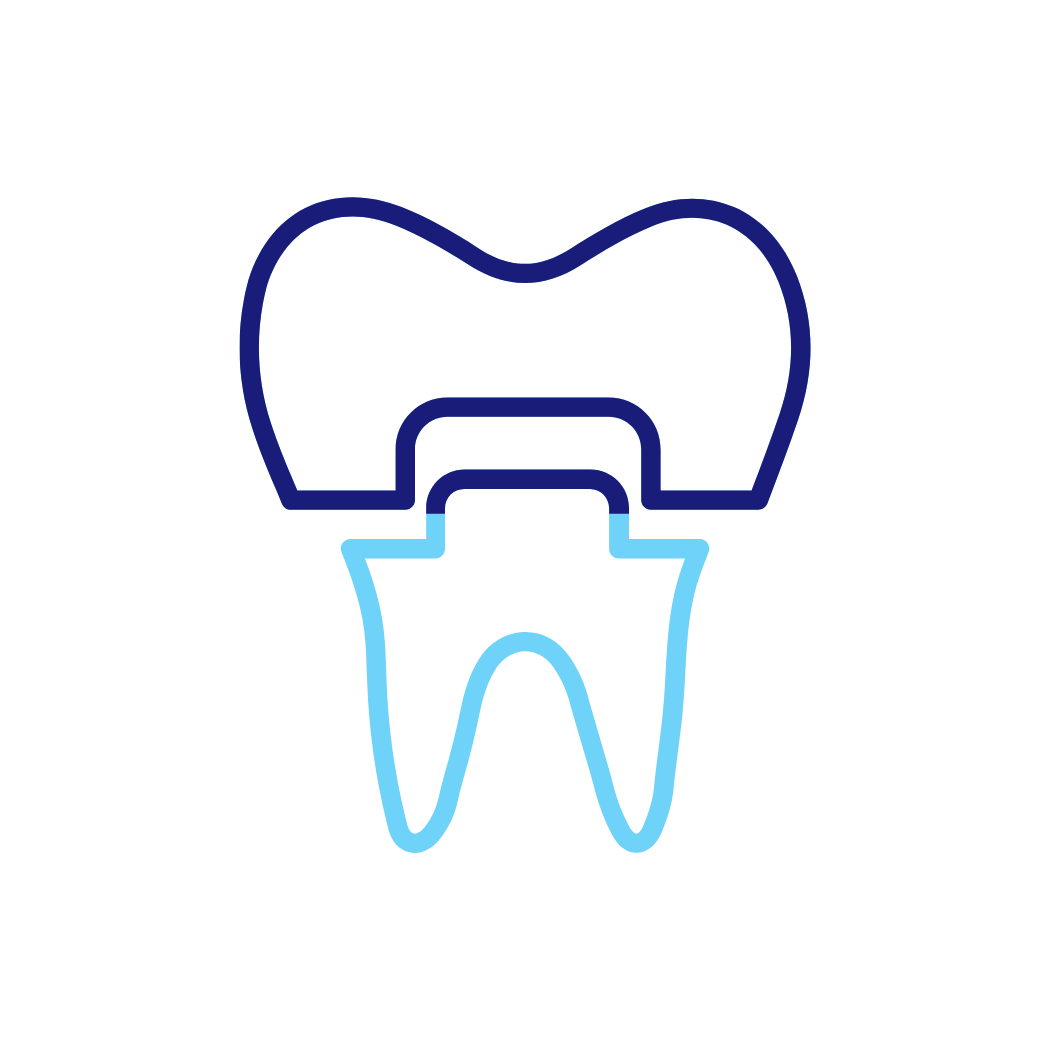
- Dental implants are titanium posts surgically placed into your jawbone, where they fuse with the bone through a process called osseointegration. A custom crown or bridge is then attached on top, and the result functions like a natural tooth.
That structural difference, sitting on the gum versus fusing with the bone, is what drives almost every other difference between the two, from comfort to cost to long-term oral health.
Dental Implants vs Dentures: Cost Over Time, Not Just Upfront
On the sticker price alone, dentures win easily. A full set of dentures typically costs $1,000 to $3,500 per arch, while a single dental implant, including the post, abutment and crown, generally runs $3,000 to $5,500. Full-arch implant restorations can climb higher again, from $20,000 to $50,000 or more.
But upfront cost only tells half the story. Dentures usually need relining every one to two years and full replacement every five to eight years, because your jawbone continues to change shape once teeth are gone. Add up adhesives, relines and replacements over a 15 to 20 year period, and the total often approaches or exceeds what a single implant would have cost outright.
Implants, by contrast, carry a much smaller ongoing cost. Routine checkups and cleanings are still required, and the crown on top may need replacing after 10 to 15 years of normal wear, but the titanium post itself can last a lifetime with proper care. When you compare true long-term investment rather than just the number on day one, implants frequently come out ahead for patients who keep their teeth long enough to see the maths play out.
How Long Do Dental Implants Last?
This is the question most patients actually want answered, because it's what determines whether the higher upfront cost is worth it.
A large 2026 study covering more than 158,000 implants, published in the Journal of Functional Biomaterials, recorded a clinical success rate of 97.83%, with 20-year survival rates above 90%. That makes implants the longest-lasting tooth replacement option currently available, well ahead of the five to eight years typical of dentures.
A few factors influence how long your implants will last:
- Bone health. Sufficient bone density is needed for the implant to fuse properly, which is why some patients need bone grafting first.
- Oral hygiene. Implants don't decay like natural teeth, but the gum tissue around them can still develop inflammation if not cared for properly.
- Smoking and certain health conditions. Both can reduce success rates and slow healing.
- Bite force and grinding. Untreated teeth grinding puts extra strain on the implant and its crown.
Every mouth is different, and the only way to know whether you're a strong candidate is a proper clinical assessment. If you'd like to find out where you stand, you can book a consultation and get a clear answer based on your own bone health and history, not a general estimate.
Dental Bridge vs Implant: Another Option Worth Weighing
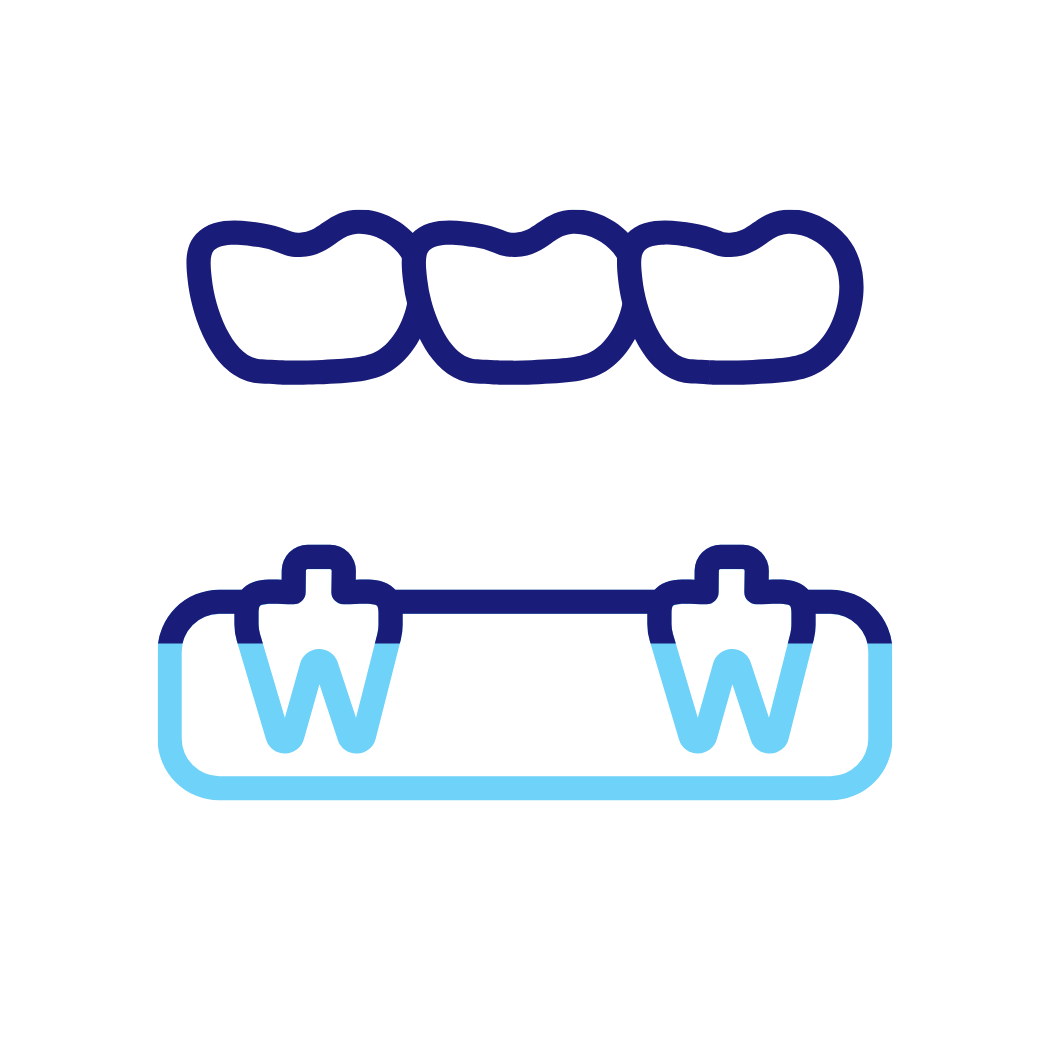
Implants and dentures aren't the only two paths. A dental bridge, which uses your existing neighbouring teeth as anchors to hold a false tooth in place, is a common third option, particularly when you're only replacing one or two teeth.
The trade-off is straightforward:
- Bridges are faster to place and typically cheaper upfront than implants, but they require grinding down healthy adjacent teeth to act as supports, and they don't stop bone loss in the area where the tooth is missing.
- Implants cost more initially and take longer, since they involve a healing period, but they preserve your natural teeth, maintain bone density, and generally last far longer than a bridge, which usually needs replacing every 10 to 15 years.
If you're weighing a dental bridge vs implant for a single missing tooth, it's worth understanding both options properly before deciding. Our dental implants page walks through how each option works in more detail.
The Dental Implant Procedure: What to Expect
One reason patients lean toward dentures is that the implant process sounds more involved. In reality, it's a well-established sequence, typically spread across several months to allow proper healing:
- Initial consultation and imaging to assess bone density and plan implant placement.
- Tooth extraction, if the damaged tooth is still present and needs to come out first.
- Bone grafting, only if scans show insufficient bone to support the implant.
- Implant placement, where the titanium post is surgically positioned in the jaw.
- Healing and osseointegration, usually three to six months, while the bone fuses around the post.
- Abutment placement, a small connector piece attached once healing is complete.
- Custom crown fitting, the final visible tooth, matched to your natural teeth.
Most of this process involves healing time rather than active treatment, which is why total timelines vary more than the individual steps might suggest.
Which Option Is the Better Long-Term Investment for You?
There's no universal right answer, but a few questions can point you toward the better fit:
- How many teeth are missing? Multiple missing teeth across a full arch often make dentures, or an implant-supported denture, more practical than individual implants.
- What's your bone health like? Significant bone loss may require grafting before implants are viable, which adds time and cost.
- How long do you want this solution to last? If you're planning for decades rather than years, implants generally offer better value despite the higher starting price.
- What's your budget flexibility right now? Dentures remain the more accessible option for patients who need a lower upfront cost, even if the long-term maths favours implants.
The Bottom Line
Dental implants vs dentures isn't a question with one correct answer, it's a question of what you value most: lower upfront cost or lower cost and better function over time. Dentures remain a legitimate, affordable solution for many patients. But for those planning years or decades ahead, implants tend to be the smarter long-term investment, both financially and for the health of your jawbone.
If you're ready to find out which option genuinely suits your mouth and your budget, visit Bright Smile Tacoma to book a consultation and get a personalised recommendation rather than a generic estimate.