
When a dentist says your tooth needs more than a simple filling, it's natural to wonder whether a crown is really necessary, or whether a filling would do. The crown vs filling decision isn't about upselling, it comes down to one mostly-measurable question: how much healthy tooth is left to work with. Here's the actual logic dentists use, so you can understand the recommendation rather than just accept it.
The Core Difference: Filling In vs Covering Over
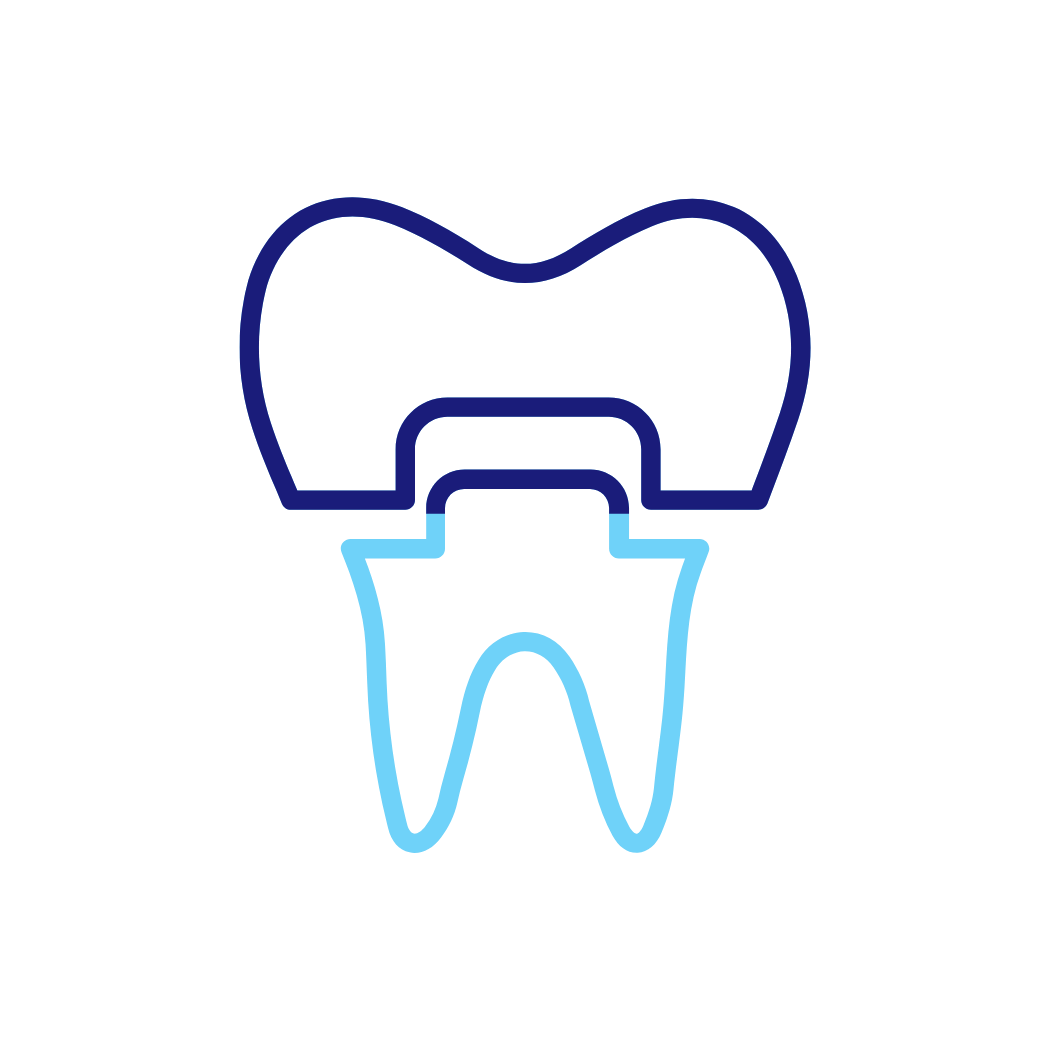
A filling and a crown do fundamentally different jobs. A filling repairs a damaged area by bonding material into the space where decay was removed, and it relies on the surrounding tooth to carry the chewing load. A crown isn't just a bigger filling, it's a cap that covers the entire visible tooth, holding it together and redistributing bite force around the whole tooth rather than concentrating it on weakened walls.
That difference is why the choice matters so much. A filling works when the tooth can still support itself. A crown is needed when it can't.
The Single Biggest Factor: Remaining Tooth Structure
Ask most dentists how they decide, and the answer is the same: it's about how much sound tooth remains after all the decay or damage is removed, not the size of the original cavity.
A widely used rule of thumb is the "50% rule": if more than roughly half the tooth structure is compromised, a crown becomes the safer long-term restoration, because there isn't enough solid tooth left to reliably hold a filling. Below that threshold, with enough healthy structure to support and anchor the material, a filling is usually the right, more conservative call.
This is why two people with "the same size cavity" can get different recommendations. It's the surviving structure that decides, not the hole itself.
The Other Things Dentists Weigh
Remaining structure is the headline, but a few other factors push the decision one way or the other:
- Cracks. A deep crack in a back tooth usually needs a crown to stop the fracture spreading toward the root. Minor chips on front teeth can often be handled with bonding or a filling.
- Root canal history. A tooth that's had a root canal is more brittle, and the access opening removes structure, so crowns are frequently recommended afterward, especially on back teeth that take heavy force.
- Location and bite force. Molars do the hard chewing, so a borderline molar leans toward a crown, where a front tooth under less load might manage with a filling.
- A large, failing old filling. This is a common one, covered next.
Why a Big Old Filling Often Becomes a Crown
Here's a scenario that catches people off guard: a filling they've had for fifteen or twenty years now needs attention, and the dentist recommends a crown instead of just redoing the filling. It can feel like overkill, but there's sound reasoning behind it.
Every time a filling is replaced, a little more tooth structure is removed to prepare the space. A small filling becomes medium, medium becomes large, and eventually there isn't enough healthy tooth left to support yet another, bigger filling. Replacing a large filling with an even larger one rarely ends well, it tends to lead to a fractured tooth within a few years. At that point, a crown is simply the more predictable way to protect what remains.
Is a Crown Always the "Safer" Choice? Not Quite
It's worth saying plainly: a crown isn't automatically better. Preparing a tooth for a crown means removing more healthy structure to make room for the cap, and that structure can't be restored later if the crown ever needs replacing. A good dentist prefers the most conservative option that will reliably last, recommending a crown when a filling would genuinely suffice serves no one, since it costs more and sacrifices more tooth.
The flip side is also true, though: trying a filling where a crown is really needed usually ends in a cracked tooth down the line, which can cost more to fix than doing it right the first time. The goal is matching the restoration to the tooth, not defaulting to either option. If you'd like a clear explanation of why a specific tooth needs what it needs, get in touch with our team and we'll walk you through it.
The Bottom Line
The filling-or-crown decision comes down to how much healthy tooth remains after damage is removed, with cracks, root canals, bite force and the history of old fillings all feeding in. A filling preserves more tooth and suits smaller damage; a crown protects a tooth that's lost too much structure to hold a filling safely. The right answer is whichever reliably saves the tooth with the least sacrifice, and that's a judgement made tooth by tooth. Our crowns and bridges page explains what's involved if a crown turns out to be the answer.
Wondering whether your tooth needs a filling or a crown? Visit Bright Smile Tacoma for an assessment and a straight answer.